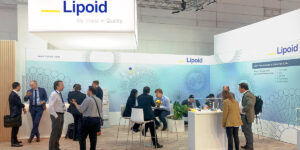
Around 2,400 exhibitors and probably well over 60,000 visitors attended this year’s CPhI in Frankfurt. The stimulating discussions, the exchange with existing and new partners, and the great interest in our booth and our products made this trade fair a successful event. Many thanks to our international sales team for the many productive meetings and interesting discussions about trends and opportunities in phospholipid-based excipients. We are already looking forward to the next edition in Milan.
CPhI in Frankfurt.
We would like to thank everyone for a great trade fair.
2025 – New milestone reached at the Cologne site: Logistics, administration, and production areas ready for planned commissioning in 2026
The new logistics building and the areas for quality control, quality assurance, and administration are ready for occupancy. The commissioning of the production building is also within reach. This marked the start of an intensive phase at the site in the second quarter of 2025, characterized by relocations, technical approvals, commissioning, and qualification and validation processes.
With state-of-the-art process and plant technology, the group continues to pursue its goal of significantly increasing production capacity at the site while consistently implementing its own sustainability targets.
The investment underscores the Lipoid Group’s clear decision to strengthen the location in the long term and expand it in a future-proof manner.
LIPOID Liposome Basic H: Pre-formulated High-quality Liposomes
Formulating High-Quality Supplements Can Be So Easy

The Basics of Liposomes
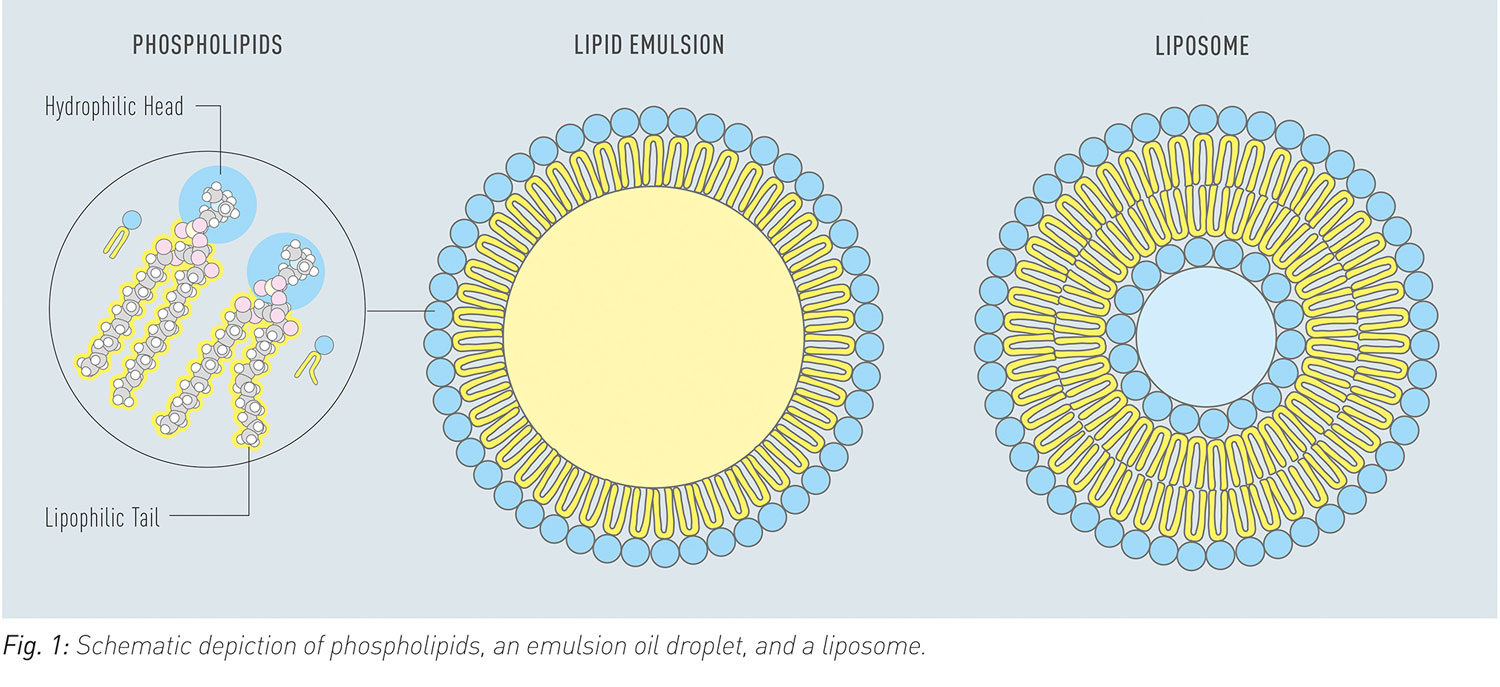
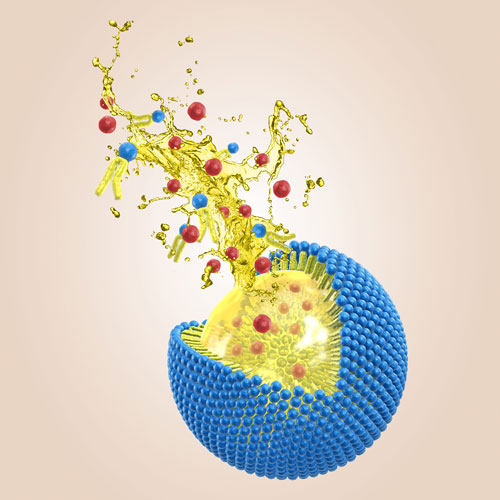
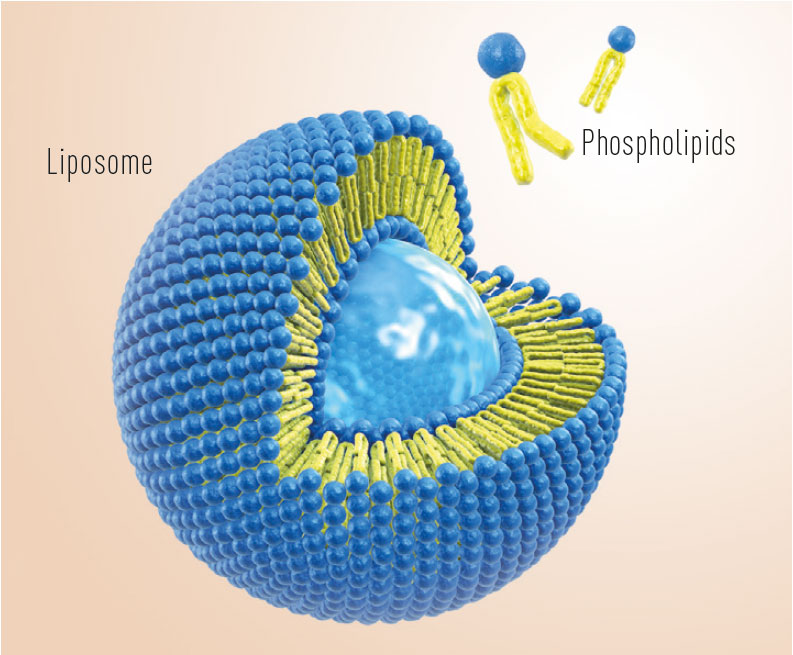
LIPOID Liposome Basic products are high-quality pre-formulated concentrates that can be combined with your nutrients of choice. Our liposomes are composed of 100 % natural phospholipids which self-organize in water as bilayer structures due to their amphiphilic properties. Liposomes can help to improve the bioavailability of nutrients and are the vehicle of choice when it comes to increased natural absorption of, e.g., vitamin C.
What is new?
In addition to the product based on non-GMO soybean phospholipids, we now launch a sunflower-based variant of our high-quality pre-formulated liposomes: LIPOID Liposome Basic H. LIPOID Liposome Basic H is the ideal solution for clean label supplements.

Fig. 1: Schematic diagram of phospholipids and a liposome
Why Quality Makes the Difference
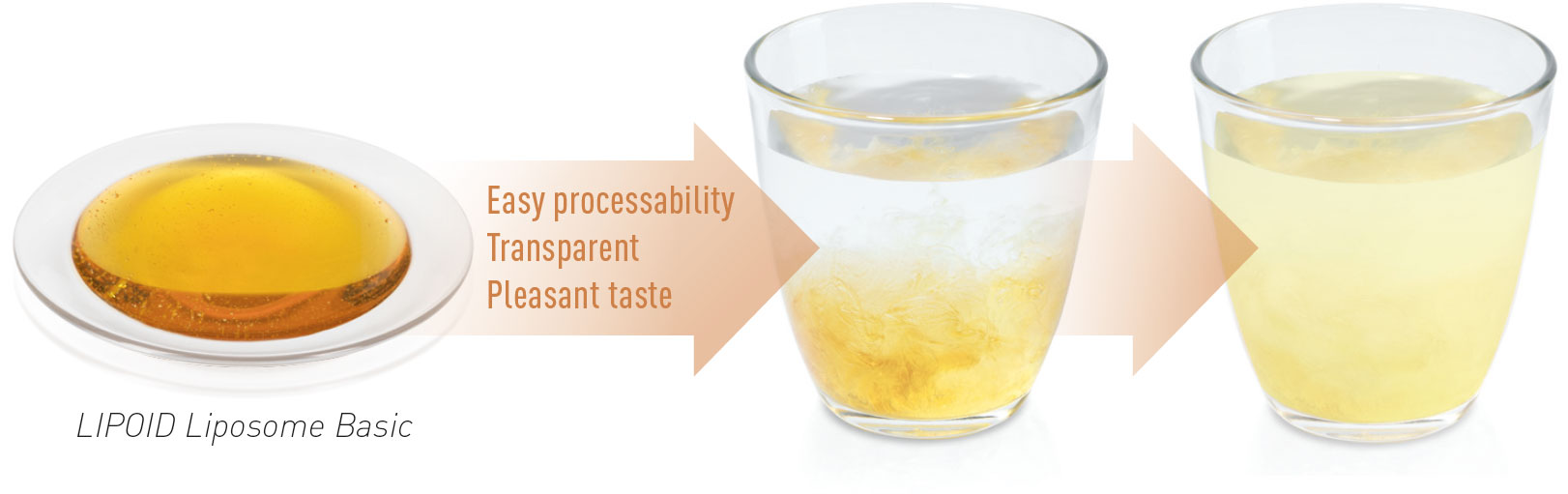
We choose only natural and well selected raw materials for our formulations by meeting the highest quality standards. LIPOID Liposome Basic is self-preserving and therefore free of preservatives and ethanol. Due to its small and uniform particle size LIPOID Liposome Basic has a transparent
appearance and a great stability. The pleasant taste makes all the difference.
Versatile Applications of Liposome Basic
LIPOID Liposome Basic can be mixed with a wide range of hydrophilic nutrients without the use of expensive technical equipment. It can be utilized pure or diluted and is compatible with many types of applicators.
Phosphatidylcholine – More than just Choline
What is Phosphatidylcholine?
Phosphatidylcholine is the fat-soluble form of the vitamin-like substance choline and an important phospholipid for the human body. The molecule consists of a water-soluble choline head and two fat-soluble fatty acids including polyunsaturated ones. Phosphatidylcholine exhibits antioxidative properties, can reduce inflammation and enhance cell membrane integrity.
Furthermore, positive hepatoprotective effects of these fatty acids could be demonstrated in several clinical studies.
Current Supply Situation in the Population
High phosphatidylcholine content can be found in animal-derived food such as meat, eggs, fish and milk or in breast milk. Plant-derived foods contain comparatively low amounts of phosphatidylcholine. The recommended daily intake of choline set by the FDA is 550 mg/day for men and 425 mg/day for women. Pregnant and lactating women have a further increased need for choline of 450 g/day and 550 mg/ day respectively. Nowadays, most population groups do not reach the recommended choline intake.
Choline occurs in various supplementation forms, including synthetic choline bitartrate and natural phosphatidylcholine. The natural form is widely present in animal and plant cells, as well as in breast milk. To provide this valuable form of choline, Lipoid offers high-quality phosphatidylcholine from natural sources like soybeans or sunflowers.
The benefits of natural phosphatidylcholine over artificial choline salts:
- Phosphatidylcholine can be efficiently processed by the body via natural pathways to form new cell structures
- Phosphatidylcholine has an enhanced bioavailability and faster absorption
- Due to the effective natural uptake, phosphatidylcholine does not reach the large intestine and therefore is not converted into transmethylamine-N-oxide (TMAO) by gut microbes
- In addition to choline, phosphatidylcholine provides essential unsaturated fatty acids that contribute to its health benefits
Sunflower Phospholipids: Portfolio for Health Nutrition Applications
Lipoid offers a unique portfolio of high-grade phospholipids sourced from non-GMO sunflowers for nutraceutical applications. These phospholipids offer a natural and sustainable option, ensuring clean label compliance.
Rich in essential fatty acids and phosphatidylcholine, they can be used to support cognitive health, liver function, or as high-quality building blocks for liposomes and emulsions to enhance the performance of your active ingredient.
Get in contact with us to discuss which product is the best fit for your applications.

Phospholipids for Pediatric Dosage Forms
Safe and Endogenous Compounds for Pharmaceutical Applications
Phospholipids are ubiquitous, endogenous, and nutritional compounds. For pharmaceutical applications, phospholipids are safe and versatile excipients for any administration route. This is demonstrated by their long-standing use in several innovative pediatric drug products and their recognition by regulatory authorities. The excellent tolerability and safety profile of phospholipids is underscored by their presence in breast milk and infant formula, making them one of the first nutrients that infants ingest.

Excipient Selection for Pediatric Drug Products
Formulating drug products for children poses unique challenges. Excipients are key components in the formulation of age-appropriate drug products that are suitable for the envisaged administration route, API, and target age group. In addition to functionality and quality, taste and palatability of the dosage form are typical aspects of drug formulation for children. Moreover, particular attention has to be paid to excipient safety.
As endogenous compounds with an established regulatory framework, phospholipids perfectly fulfill existing safety and quality requirements. Moreover, they provide versatile functionalities and are compatible with a wide range of age-appropriate dosage forms (Figure 1).

Figure 1: Selection of phospholipid-based formulation options and their conversion in oral dosage forms.
Concluding Remarks
Regulatory authorities require consideration of pediatric dosage forms early during the product development. The unique needs of children in terms of safety and efficacy must therefore be considered when selecting excipients. Because of their excellent safety profile, multifunctionality, and compatibility with a wide variety of dosage forms, phospholipids are ideally suited for this purpose. Moreover, they allow simultaneous development of pediatric and adult formulations, as well as conversion of adult formulations to pediatric ones without the need to exchange excipients. Various organizations have confirmed the safety of lecithin and phospholipids from a regulatory perspective including their suitability for pediatric formulations.
Lipoid provides phospholipids in cGMP quality from small to large scale to support your product development from pre-clinical to clinical and commercial stages.

Lipoid at the „8th International Symposium on Phospholipids in Pharmaceutical Research”
Every second year, the Phospholipid Research Center Heidelberg invites phospholipid researchers and enthusiasts to the “International Symposium on Phospholipids in Pharmaceutical Research”. This year, around 150 participants visited the symposium. The participants presented 54 posters and several invited and selected talks. We enjoyed fruitful discussions at our booth and the poster exhibition, as well as interesting talks about phospholipids, covering their application as excipients to stabilize protein formulations, as versatile building blocks of advanced drug carriers such as liposomes and lipid nanoparticles, and their use in self-dispersing formulations.
We are looking forward to the next symposium in 2026!
Lipoid at Vitafoods Europe 2024 in Geneva – Europe’s leading trade fair for nutrition
With almost 800 exhibitors and over 17,000 visitors, Vitafoods Europe, which took place from May 14 to 16, 2024, provided an excellent platform for meeting existing partners and making new contacts. This year, we placed a special focus on our portfolio of high-quality phospholipids and phospholipid-based carrier systems from sunflowers. We would like to thank you for the many exciting discussions and look forward to the next trade fair in Barcelona!
PhytoSolve ADEK®: Four Lipophilic Vitamins in One Water-Soluble Formulation
Lipophilic Vitamins – A, D3, E, and K2
The four lipophilic vitamins A, D, E, and K are essential nutrients involved in numerous processes in the human body.
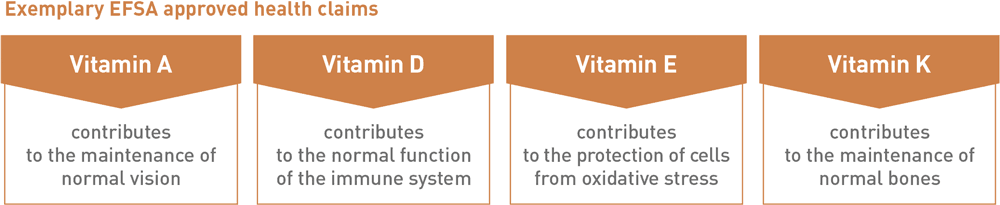
Figure 1: Selected examples of 14 EFSA approved health claims.
PhytoSolve® Technology
The PhytoSolve® delivery technology enhances the uptake of lipophilic nutrients in a natural way. Fat-soluble substances, like the four lipophilic vitamins A, D, E and K, require a carrier to be effectively absorbed. Due to their amphiphilic properties, phospholipids can enclose fat droplets in the form of an emulsion. The performance of the PhytoSolve® technology could be shown in an in vivo study with vitamin E.
PhytoSolve® ADEK
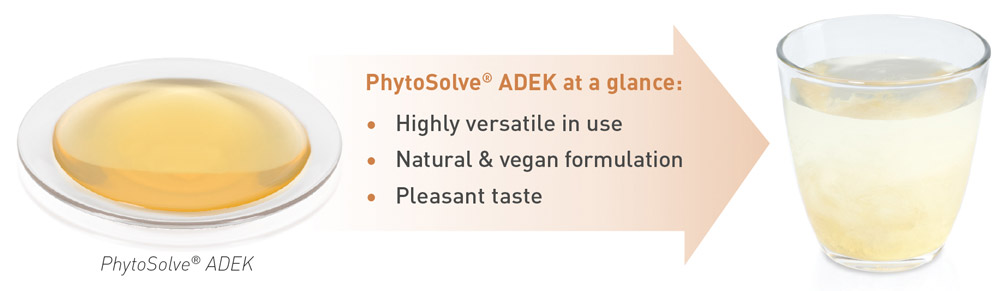
The unique formulation PhytoSolve® ADEK stands out from typical ADEK products owing to its excellent performance and high customer convenience. It enables a homogeneous distribution of the four lipophilic vitamins in an easy to dose but still small volume. PhytoSolve® ADEK can be mixed in any ratio with water, juice, dairy products, and many more.

Phospholipids for Oral Dosage Forms
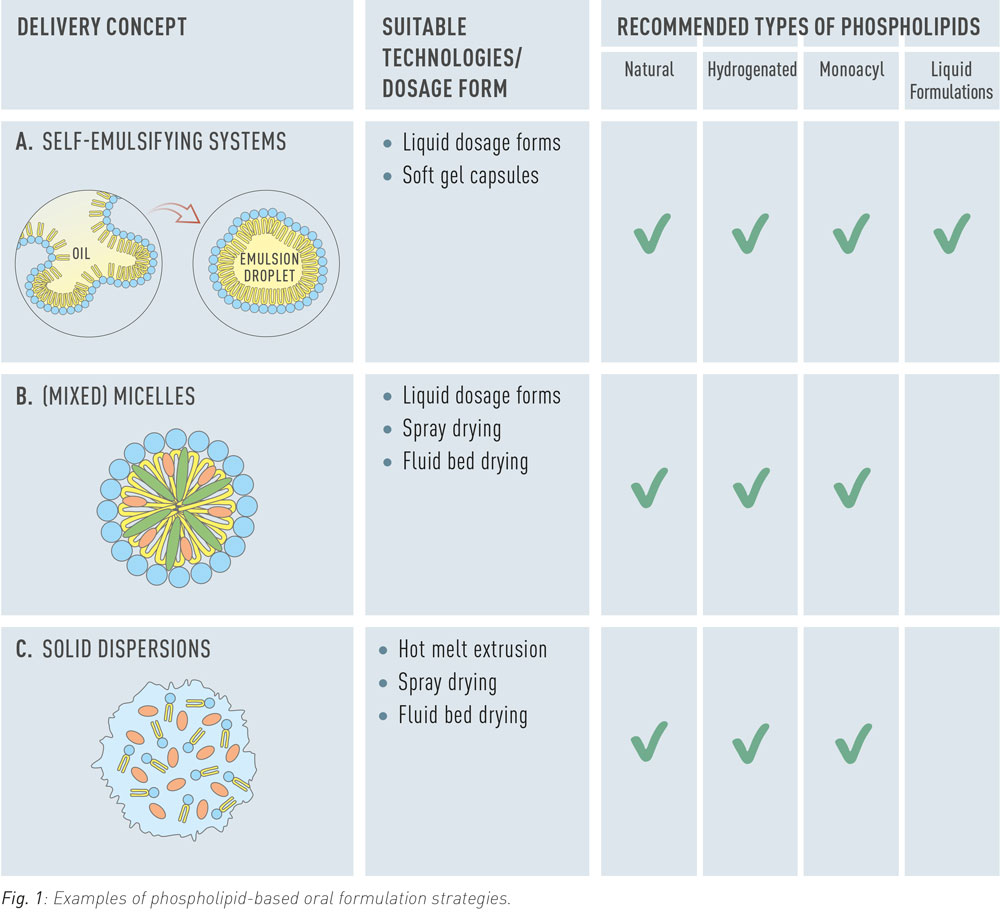
Poor solubility, slow dissolution rate, gastrointestinal degradation, and low permeability are typical factors that limit oral bioavailability of drugs. In order to overcome these limitations advanced formulations with phospholipids can be used. Phospholipids are diversely used as excipients in such formulations as dispersing agents, emulsifiers, or as additional or sole matrix components for solid dispersions (Fig. 1). Liposomes dissociate in the gastrointestinal tract and release phospholipids, which provide solubilising effects.
Moreover, phospholipids are applied as technical excipients in tablet coatings or as processing aids to produce soft gel capsules.

Self-Emulsifying Systems
Self-emulsifying systems (often referred to as SEDDS) are water-free formulations that spontaneously form emulsions in aqueous media, including gastrointestinal fluids. They are used predominantly for solubilization of lipophilic drugs to increase their bioavailability. In formulations for oral ingestion, self-emulsifying systems are typically applied as oily liquid or in form of a soft gel capsule. The preconcentrate can be administered in its water-free form but may also be diluted in an appropriate beverage before administration.
Mixed Micelles
In the gastrointestinal tract, mixed micelles composed of endogenous phospholipids and bile salts solubilize lipophilic nutrients to make them available for absorption. Pharmaceutically applied mixed micellar formulations consist of soybean phosphatidylcholine and therefore offer a natural vehicle for lipophilic drugs such as Vitamin K.
Solid Dispersions
Solid dispersions are widely employed to enhance the dissolution of poorly soluble crystalline drugs by amorphization of the drug substance. Phospholipids are investigated as complementary or sole matrix material for this purpose. In addition to amorphization, phospholipids contribute to drug solubilization by enhancing wettability, forming colloidal structures upon hydration and stimulating the secretion of bile.
Concluding Remarks
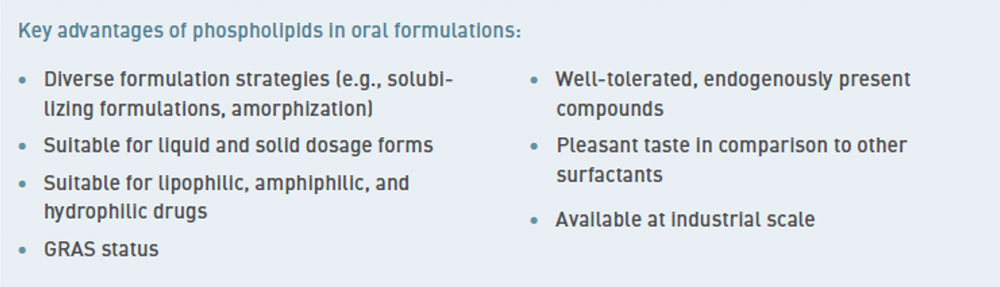
Phospholipids are multifunctional excipients with versatile applications in oral formulations. Their physiological role in digestion and absorption processes underscores their biocompatibility, functionality, and safety.